
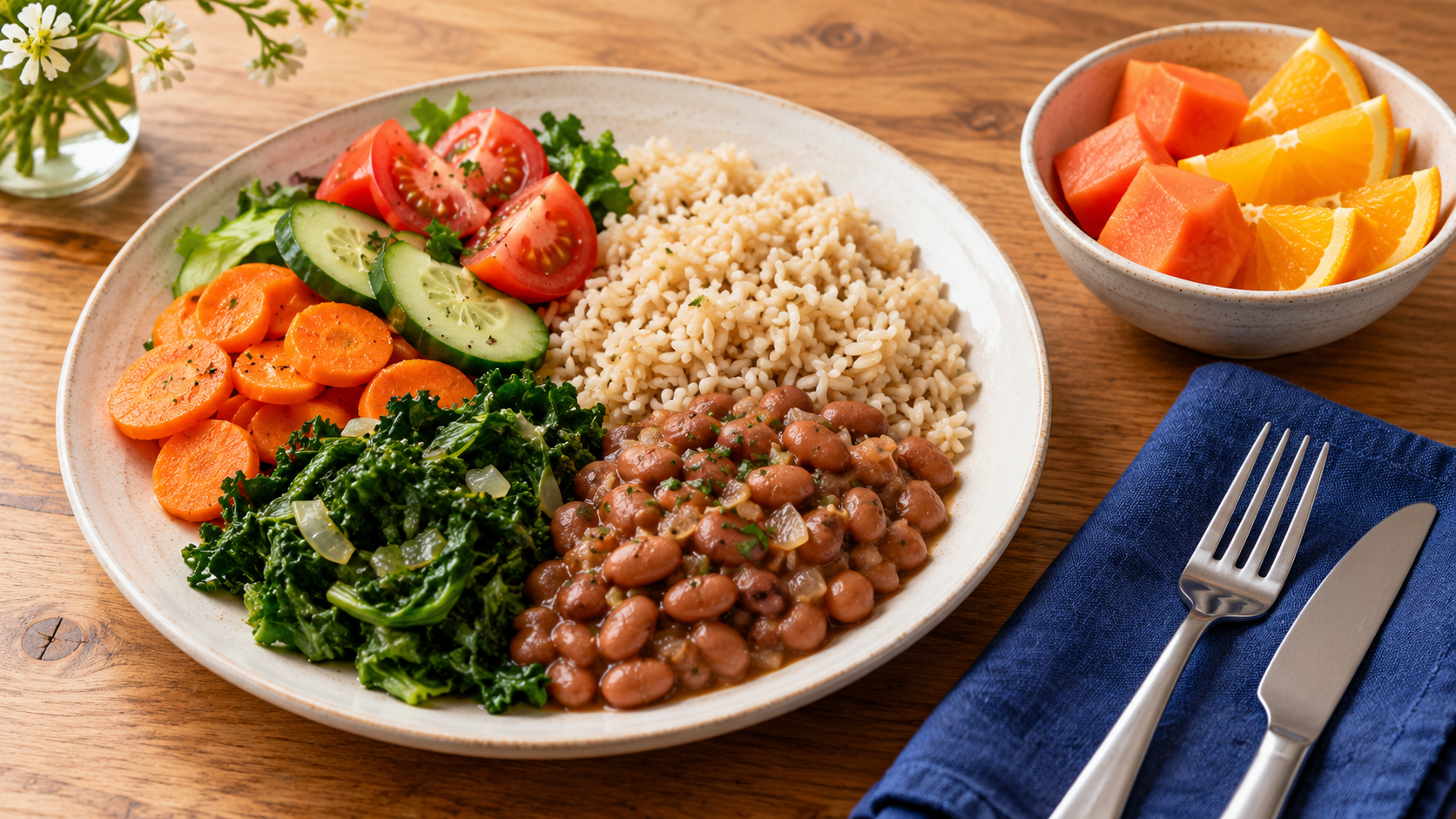
A healthy eating pattern does not require replacing every familiar meal. The World Health Organization emphasizes adequacy, balance, moderation and diversity, with room for different cultures and locally available foods.
Think about the whole meal
WHO identifies varied, minimally processed foods as a foundation of a healthy diet. Whole grains, vegetables, fruits and pulses can contribute to that variety. Foods high in free sugars, sodium and unhealthy fats should be limited.
For a practical meal-planning exercise, write down three meals you already enjoy. Next to each, note an affordable vegetable, fruit or pulse you could include. The purpose is to create a usable shopping list, rather than a completely new identity in the kitchen.
Make the change specific
A note such as “buy vegetables for Tuesday’s dinner” is easier to act on than “eat perfectly.” Choose ingredients you can store and prepare with the time and equipment available.
Individual needs vary. A clinician or qualified dietitian can help tailor food choices when allergies, pregnancy or a medical condition affect what you should eat.
Source: WHO: Healthy diet. General health education.